10 Activities Sales Managers Should Focus On
Written by: Mike Carroll
When I talk with CEOs, I often hear them complaining about how their sales managers are always busy, but not productive. When I dig a little deeper, I usually find this is an issue around how sales managers define their priorities and where they focus their time. Often times, sales managers miscalculate which activities need the most attention, and waste their valuable time doing nonproductive things.
In this article I will concentrate on a list of 10 activities that sales managers should focus on. In your company you may have more than 10, but let’s use this as a starting point:
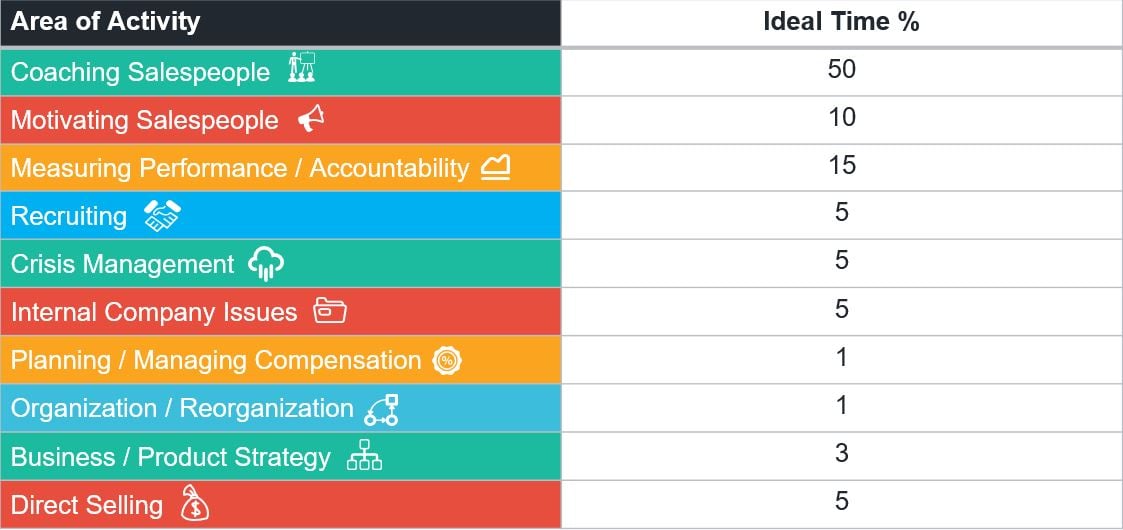
- Coaching Salespeople: This should account for about 50% of sales managers time. They should focus on 3 types of coaching conversations – administrative, strategic and situational. In a 40-hour work week, about 20 hours of their time should be spent directly coaching their salespeople in a structured, organized fashion. This almost never happens in companies before we start working with them and helping managers learn how to coach.
- Motivating Salespeople: Motivating sales people should be around 10% of their time. Your sales managers need to learn what motivates each individual salesperson. It seems obvious, but few managers understand that not everyone is motivated the same way. For example, do your sales mangers know who on their team is intrinsically or extrinsically motivated? Do they understand that an intrinsically motivated person is going to get more motivation from a quiet, “atta-boy” in the hallway after the sales meeting? On the other hand, an extrinsically motivated person is going to thrive on public praise and wants attention during the sales meeting.
- Measuring Performance/ Accountability: This should be about 15% of their time. Holding people accountable is really about setting clear, key performance indicators. What are your sales managers measuring, and how are they holding their team to these standards? Best practices for this are to have a handful of leading indicators - number of appointments, quality of appointments, activity, how many calls are they making per week. Also, be sure to have lagging indicators - Are we closing business when we say we will? Are we holding our margin? Are we tracking to our revenue plan? And most importantly, how do the conversations between managers and salespeople change when they are falling behind?
- Recruiting: Recruiting should be about 5% of their time. We believe sales managers should be recruiting all the time, but that doesn’t mean it needs to take up a lot of their time. Part of creating a culture of accountability is being ready to let go of low performers, and the only way you can do that effectively is if you're constantly recruiting and building your virtual bench. We believe a busy, productive sales manager should spend about 5% of their time maintaining your virtual bench and doing some sort of recruiting activity. Obviously, that might spike up in certain periods if you're opening more positions. Visit our Free Tools Library to get our resources to help you hire A-players.
- Crisis Management: About 5% of their time should be budgeted for this. This really refers to handling client crises and other situations that may come up. The key here is to make sure it doesn’t consume all of a sales manager’s time. If that’s the case, there may be a bigger problem in your sales process.
- Internal Company Issues: About 5% of sales manager’s time should be used for internal company issues. When dealing company issues such as new policies or sitting on a marketing committee, really guard your sales manager's time. Ask yourself before you invite them, do we really need their input or can we move the ball forward without it and then review it with them later?
- Planning/Managing Compensation: This should really be 1% of their time. It shouldn't be a big issue. It's something you're typically looking at annually. Again, that goes back to understanding how your team's motivated, are they more intrinsic or extrinsic? Most sales people are going to get more motivation from a higher-based salary and the opportunity for unlimited upside potential. Make sure your comp plan aligns with that.
- Organization/Reorganization: Organizing and reorganizing, again is more of a periodic activity, and should maybe be 1% of their time. Again, make sure you guard your sales manager’s time. We’ve seen situations where managers are consumed by a constant shuffling of territories, people, and strategies.
- Business/Product Strategy: Limit business and product strategy to maybe 3% of their time. One of the advantages that sales people bring to product managers is their real time feedback from the market. As this is helpful information, sales managers often get sucked in too deep with this that it consumes their time.
- Direct Selling: We think 5% of manager’s time should be allocated to directly selling to the market. We believe every sales manager should have a book of business. That's the only way they're going to stay sharp. That's the only way they're going to stay current. They still need to have some clients and directly sell.
You may have other activities that you want your sales managers to focus on, but this list provides a good starting point. When is the last time you focused on where your sales managers are investing their time? How confident are you that they are spending their time in the right areas? Are they getting a good return on their time and if not, what needs to change?
Also, if you don’t have sales managers, and you’re the sales manager by default, which of these activities are you not getting to? My guess would be; you're probably not spending as much time coaching your sales people as you need to. If that's the case, we need to talk, so contact me and we can tell you more about our accountability coaching program.





Harvard Study Explains Why Sales People Talk Too Much
An article in today's Wall Street Journal caught my eye, "Science Reveals Why We Brag So Much." It talks about a ...
Ready to Build a High-Performing Sales Team?
Let's create your custom Sales Transformation Program.